
You should always expect clear, clean water when you turn on your faucet. But what’s going on when you’re greeted by brown, yellow, or cloudy liquid or find black specks floating in your glass? Water discoloration can happen for several reasons. Some causes are harmless and easy to fix, while others signal serious plumbing problems that need professional attention. For the latter, you need Quick Action Plumbers in Mableton, Cobb County, or Metro Atlanta, GA. We understand what different water colors mean and can provide fast, effective solutions to protect your family’s health and preserve your home’s plumbing system.
Black Specks or Sludge
Black stuff coming out of the faucet is one of the most alarming water problems that homeowners face. These dark particles might appear as tiny specks, large chunks, or thick sludge coating your sink. Several issues can cause black material in your water:
- Corroded Pipes – Older iron or steel pipes break down over time, releasing black particles into your water supply.
- Deteriorating Rubber Gaskets – Washers and gaskets in your faucets or water heater wear out and shed black rubber pieces.
- Manganese Buildup – This naturally occurring mineral turns black when it oxidizes in your pipes.
- Mold Growth – In rare cases, black particles indicate mold or bacteria growing inside your plumbing.
Is Black Sludge in the Sink Dangerous?
The answer depends on the source. Corroded pipe material and rubber gasket pieces are generally not toxic, but they indicate plumbing problems that need to be fixed. Manganese in small amounts is safe, though the EPA recommends limiting exposure. Mold or bacteria in your water supply pose serious health risks and require immediate professional treatment.
Never ignore black material in your water. Call a plumber to help identify the source and recommend the right solution.
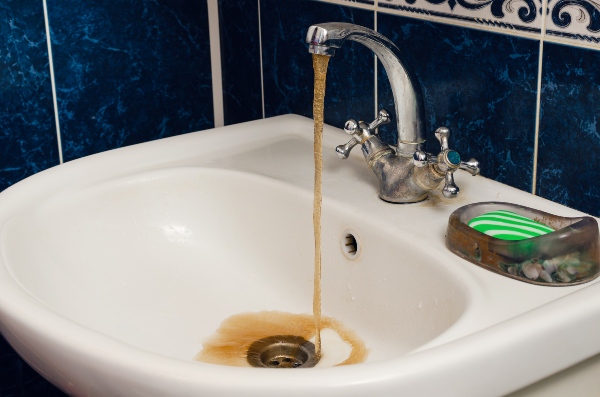
Why Is My Water Brown?
Brown water usually indicates rust or sediment in your plumbing system. This discoloration ranges from light tan to deep brown, depending on particle concentration. Common causes include:
- Rusty Pipes – Older galvanized steel pipes corrode from the inside, releasing rust into your water.
- Disturbed Sediment – Construction, repairs, or changes in water pressure can shake loose sediment that has settled in your pipes.
- Water Main Issues – Problems with municipal water lines sometimes affect your home’s water color.
- Water Heater Sediment – Mineral deposits build up in your water heater tank and can enter your hot water supply.
If only your hot water appears brown, your water heater likely needs to be flushed or replaced. If both hot and cold water are discolored, the problem exists in your main supply lines.
Brown water from rusty pipes is generally safe to drink in small amounts, but it tastes bad and stains fixtures and laundry. More importantly, corroded pipes can develop leaks, leading to costly water damage.
Why Is My Water Yellow?
Yellow water signals several possible problems. The discoloration might be light and barely noticeable or a deep yellow-orange shade. Among the potential causes are:
- Rust – Similar to brown water, yellow discoloration often comes from corroded iron pipes.
- Chromium-6 – This industrial contaminant can give water a yellow tint, though it’s relatively rare in residential systems.
- Tannins – These organic compounds from decaying vegetation can enter well water, giving it a yellow or tea-colored appearance.
- High Iron Content – Dissolved iron in your water supply oxidizes when exposed to air, turning yellow or orange.
Is It Normal to Have Tiny Specks in Your Water?
Small yellow or orange particles often accompany yellow water. These specks are typically rust particles or mineral deposits. While not immediately dangerous, they indicate problems that will worsen without professional attention.
Well water users experience yellow discoloration more often than those on municipal systems. A water treatment specialist can test your well water and recommend filtration solutions.
Why Is My Water Red?
Red or pink water is less common but just as concerning as other discoloration issues. The color might appear throughout your home or only in certain fixtures. Red water typically results from:
- High Iron Concentration – Excessive iron in your water supply creates a reddish tint when it oxidizes.
- Rusty Hot Water Heater – A corroding water heater tank releases rust particles that turn water red or orange.
- Corroded Pipes – Severe pipe corrosion can produce red water instead of brown.
- Bacterial Growth – Pink or reddish slime indicates Serratia marcescens bacteria, which thrives in moist environments.
Pink residue around drains and fixtures usually points to bacterial growth rather than water contamination. These bacteria are generally harmless but should be cleaned regularly to prevent buildup.
Red water from rust or iron requires professional evaluation. Quick Action Plumbers can determine whether you need pipe replacement, water heater service, or a whole-house water treatment system.
Why Is My Water Cloudy?
Cloudy or milky white water often worries homeowners, but it’s frequently the least serious water color issue. The cloudiness usually comes from tiny air bubbles trapped in your water. When water travels through pipes under pressure, it can absorb air. As you release that pressure by turning on your faucet, the air escapes as tiny bubbles, making the water appear cloudy. This harmless condition clears up within a few seconds as the bubbles rise to the surface. Other causes of cloudy water include:
- Cold Weather – Very cold water holds more dissolved air, creating cloudiness that disappears as water warms.
- Methane Gas – Well water sometimes contains methane, which creates a milky appearance.
- Hard Water Minerals – High concentrations of calcium and magnesium can cause a cloudy white appearance.
- Total Suspended Solids (TSS) – Dirt, sand, or other particles suspended in water create cloudiness that doesn’t clear.
To test whether air bubbles are causing your cloudy water, fill a clear glass and let it sit for a minute. If the cloudiness disappears from bottom to top, air bubbles are the culprit. If the water remains cloudy or settles to the bottom, you have sediment or mineral issues that require professional attention.
When to Call a Plumber
Some water color problems resolve on their own or with simple fixes. Others require professional diagnosis and repairs. Call Quick Action Plumbers if you notice:
- Persistent discoloration that doesn’t clear after running water for several minutes
- Black sludge or particles in your water
- Sudden changes in water color without an obvious cause
- Multiple fixtures affected by the same discoloration
- Accompanying problems like low water pressure, strange odors, or metallic tastes
- Health concerns after drinking discolored water
Contact Quick Action Plumbers to Ensure Clean, Clear Water
Our licensed plumbers stay current with the latest plumbing technology and best practices through ongoing professional development. We can resolve your water discoloration and quality issues in Metro Atlanta, so contact us today to schedule a consultation.